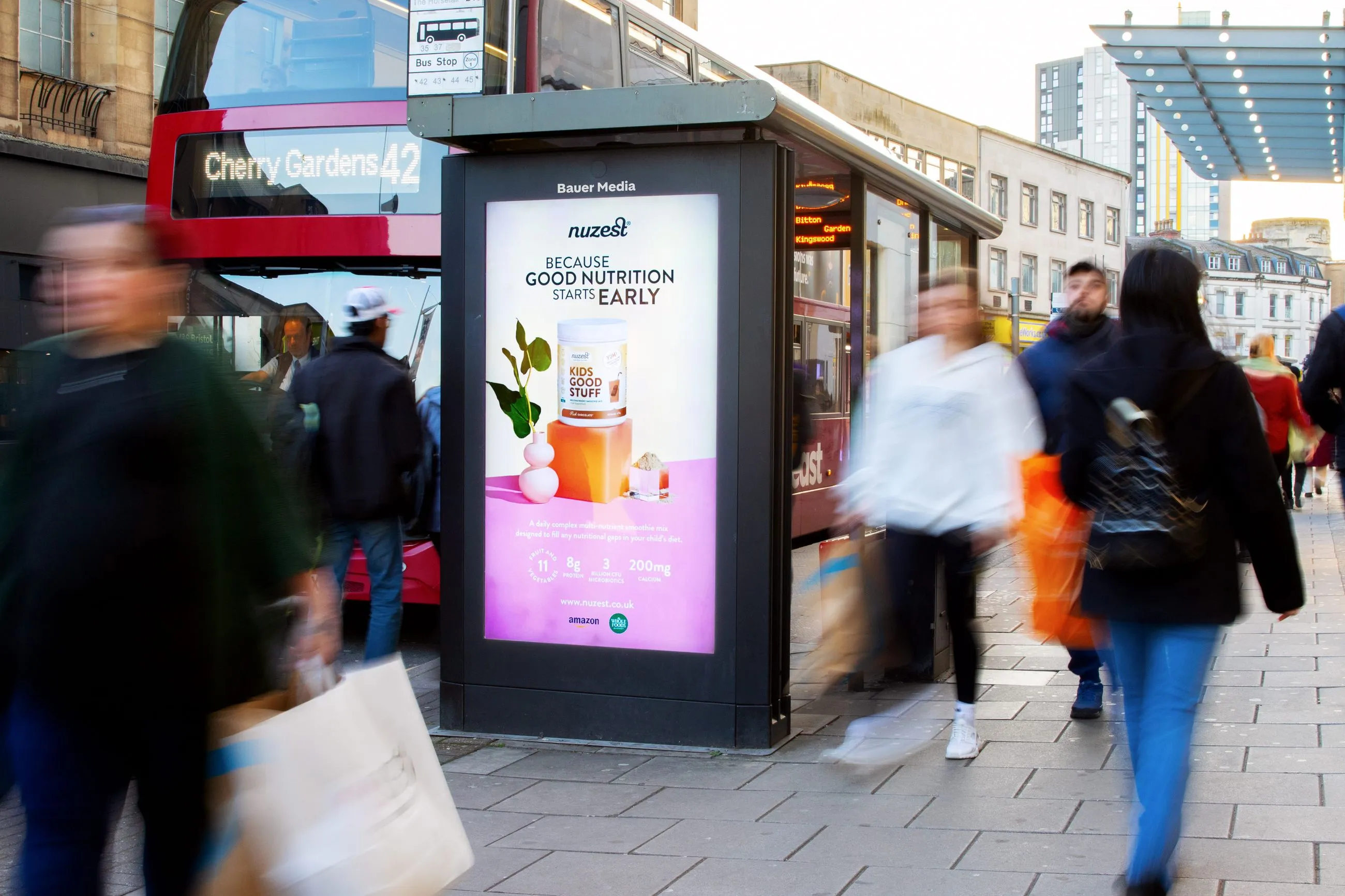


Neuroscientist on Finland's most accessible media: 'size, movement and surprise matter'
Neuroscientist on Finland's most accessible media: 'size, movement and surprise matter'
Outdoor advertising reaches 97% of the population. According to the neuroscientist, it is easy to reach people on the streets and in shopping malls, where they have the resources to perceive the environment.
Did you walk around town, take the bus or drive on the highway yesterday? So did many others, which is why outdoor advertising is the most accessible media in Finland. According to a Kantar TNS survey, outdoor advertising was outperformed by the web, TV, streaming services, the internet, newspapers and magazines, and radio.
Researcher Jaana Simola from the Neuroscience Research Centre at the University of Helsinki is not surprised by the result. She believes that not only are people exposed to outdoor advertising, but it also has a greater impact than other media.
"When people are outdoors, they are not as cognitively loaded as when they are reading a newspaper or surfing the web. On the street you have to concentrate on traffic, but otherwise people have more resources to observe their surroundings. That's why they notice advertisements more easily," says Simola.
The same expansion of cognitive or cognitive capacity is also evident in other places where outdoor advertising was studied, in addition to the streetside, he says. These included grocery stores, shopping centres, public transport and airports.
Surprising size and movement
People have long since learned where to place ads on websites and what newspaper ads look like compared to editorial content. This also makes them easy to avoid. Outdoor advertising, on the other hand, often comes as a surprise and is harder to avoid.
"When you can't anticipate an advertisement, you are bound to notice it. They can also be very large, making them almost impossible to miss," says Simola.
The movement of outdoor ads is also a powerful attention-grabber. Simola and colleagues have conducted tests to see how an animated online ad differs from a static version. There was a clear difference in the ads: if there was movement in the ad, it was significantly better perceived than the still version.
"From an evolutionary point of view, humans have had to be very sensitive to enemies. That's why our visual system is particularly sensitive to motion, and we detect it immediately," says Simola.
Advertising close to the point of purchase
Taking outdoor advertising to a new level, Bauer Media Outdoor is developing its advertising media network in key locations and close to the point of purchase.
"The agility of digital outdoor advertising, in turn, enables the advertising message to be targeted at the right time in the right place, for example, an ice cream ad in the heat and umbrellas in the rain. These are certainly good reasons why outdoor advertising has been the fastest growing media category in the last couple of years and Bauer Media Outdoor has grown rapidly," says Timo Tammi, CEO of Bauer Media Outdoor.
The Outdoor Advertising Measurement and Results 2018 study found that outdoor advertising reaches 97% of people. The next highest reach is the internet at 95 percent, followed by newspapers at 93 percent. Television and streaming services reach 91% of respondents. Respondents were asked how often they tend to do certain things, such as read the newspaper, listen to the radio or go to certain places.