

Reach the future audience with purchasing power: generations Y and Z
Reach the future audience with purchasing power: generations Y and Z
Millennials and Generation Z are an attractive target group, but they are often perceived as a challenge to reach. Their media consumption is fragmented and they actively spend time both online and offline. To influence their purchasing decisions at all these touch points, we need to think beyond digital channels. How are millennials and Generation Z's buying paths constructed, where can they be reached and what do they value?
The value of millennials and Gen Z as a target group should not be underestimated. Millennials will soon make up the majority of the working population. It is estimated that up to 75% of the global workforce will be millennials by 2025 (1. Generation Z will also become increasingly important as consumers in the near future and there is already a lot of potential in this target group.
Young people attach great importance to the acquisition of possessions: acquiring and owning is much more important to them than to previous generations of consumers, who often already have too much stuff (2). In addition to consuming themselves, millennials and Generation Z also influence their parents' behaviour: up to 93% of parents report that their children influence their family's daily purchasing decisions and consumption (3).
the attitudes of 15-29 year olds in Finland are characterised by consumerism:
... 54% of them feel that buying new gadgets and gizmos is fun,
index: 159 (total population = 100)
... 47% of them enjoy shopping of all kinds,
index: 174 (total population = 100)
... 38% of them often buy new brands to try them out,
index: 180 (total population = 100)
... 39% of them say they spend more in the shop than they had planned,
index 154 (total population = 100) (10.
While more and more advertisers have recognised the buying potential of millennials and Generation Z, younger generations are still perceived as a challenging target group to reach. For example, the use of ad-blocking software is most prevalent among young people, with up to 46% of Finns aged 15-25 using ad-blocking software (4. A recent survey also found that one in five Gen Zers reported that they had stopped using some form of TV, and 25% said they were limiting their online or smartphone viewing (5. With the proliferation of media channels and the fragmentation of consumption across multiple channels, reaching consumers has become more difficult and the impact of individual media has become diluted. Through repetition and the use of multiple media channels, a brand can reinforce its impression and be present in the right place at the right time.
Which channels reach young consumers?
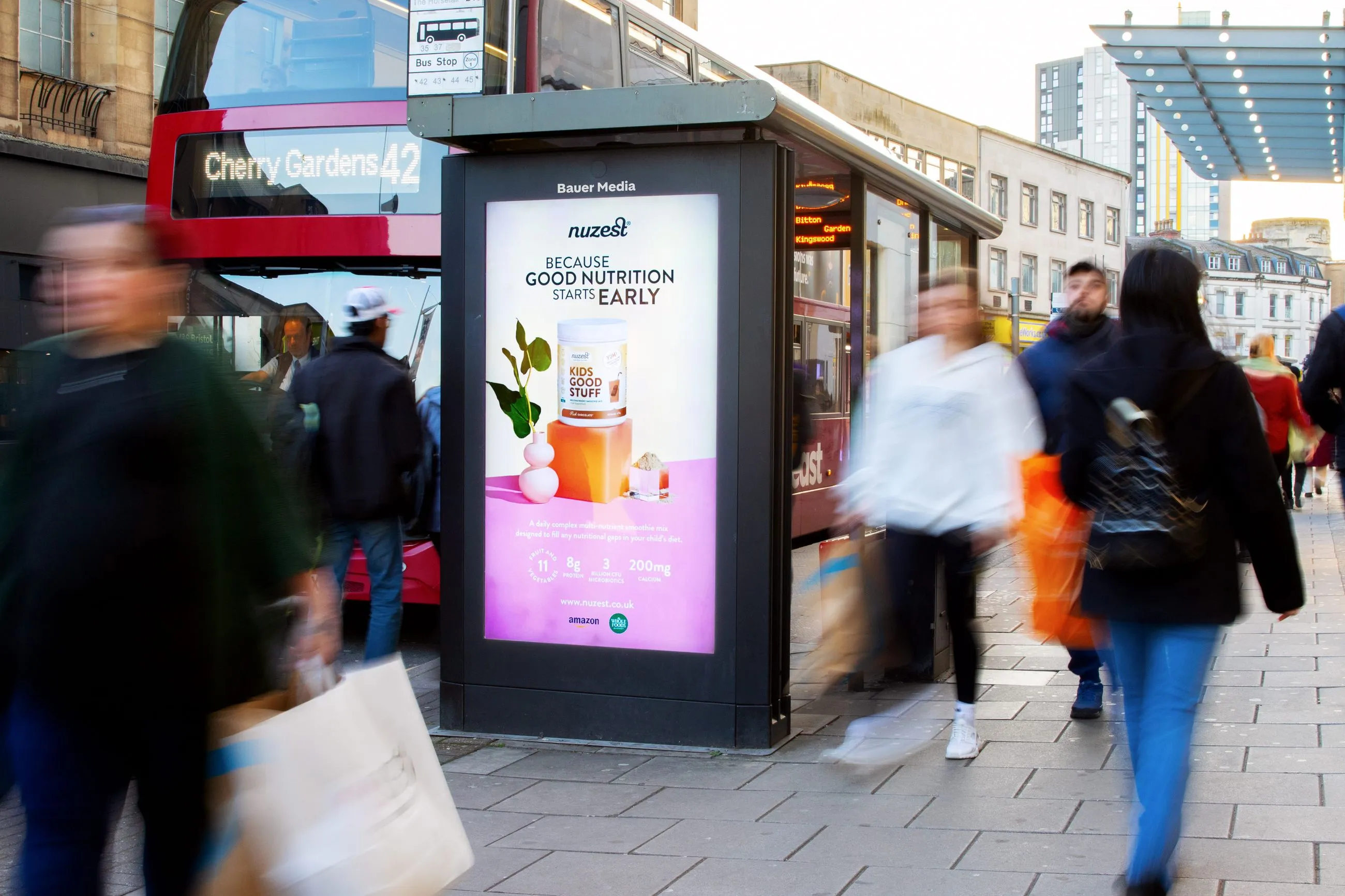
Millennials and Generation Z are looking for inspiration, discovering products and making purchasing decisions through both online and offline channels. To influence their purchasing decisions at all these touch points, we need to think beyond digital channels. According to a study (6), up to 7/10 of Generation Y and Z are open to advertising in shopping malls, compared to 5/10 for social media. Outdoor advertising works as a powerful pair alongside other channels and has been found to have a particularly strong impact on online searches (+54%) (7). Similarly, Facebook's own research found outdoor advertising to be the best media channel of all, alongside social media, increasing purchase intentions by +15% (8).
Shopping centres are excellent places to reach millennials and Generation Z...
... 85% of them are open to new things and products to buy when shopping in malls,
... 81% of them consider shopping centres as a good place to discover new products and brands,
... 73% of them think that advertising in shopping centres can provide useful information,
... 50% of them shop in bricks-and-mortar stores because it is more convenient than shopping online,
... 43% of them want to visit shopping centres because they can see or physically touch the product, and
... 20% of their online purchases are inspired by or have been previously researched in retail stores (6.
The study suggests that retail and shopping centres are a major part of the shopping journey of millennials and Generation Z, not only as a place to shop but also as a place of inspiration and research. Shopping centres are evolving into experience centres, offering not only products but also experiences, entertainment and restaurants. They are an essential part of people's leisure time and cannot be replaced by other shopping solutions. According to the Digital Society Index (5), 44% of respondents said they would choose brick-and-mortar over online retailing, compared to 36% in 2019. Shopping centre advertising therefore plays a distinctive role along the shopping path of young consumers.
However, mall advertising is not the only excellent way to reach Generation Z and millennials. According to a study(9)...
... 89% of 15-29 year olds are exposed to outdoor advertising in S Group grocery stores during the week
» advertising in grocery stores
... 78% of 15-29 year olds are exposed to outdoor advertising in the Helsinki metropolitan area, Turku and Tampere or in the centres of other large cities
» advertising in urban environments
... 71% of 15-29 year olds are exposed to outdoor advertising in shopping centres during the week
» advertising in shopping environments
Young people value responsibility and pleasure
Although young people's responses emphasise consumerism, consumption is responsible. According to the survey (11), three out of four young people aged 15-24 say they prefer responsibly produced products and services wherever possible and 67% of young people under 25 are prepared to pay more for a domestic product. In addition to domesticity and responsibility, price and quality are important factors for young people.
Young people are looking for experiences and pleasures. 72% of young people aged 15-24 cite pleasure as a factor influencing their purchasing decision (11, while adults place more emphasis on rationality. More than half of 15-24 year olds also feel that the brand image conveyed by a product or brand is fairly or very important. The importance of a brand in purchasing decisions is high regardless of where in Finland the young person lives (11.
Outdoor advertising is therefore ideally suited to brand building. A wide range of solutions are available to build brand awareness, reputation and reach. Outdoor advertising is unobtrusive, cannot be ignored and reaches consumers throughout the purchase path from awareness to purchase. As such, it is an excellent counterpart to digital media channels and an effective way to reach young audiences.
SOURCES
1. Mark Hall, Forbes (2017) What The Ideal Workplace Of The Future Looks Like, According To Millennials
2. Sales and Marketing Professionals (2019) Generation Z is not afraid to spend
3. Tanya Dua, Digiday (2015) Four things brands need to know about Gen Z
4. Statista (2020)
5. Dentsu Aegis Network (2020) Digital Society Index 2020
6. Tapestry 2020.
7. Rapport (2019) Standing on the Shoulders of Giants
8. Facebook IQ: Maximize Reach With Out-of-Home and Facebook Campaigns in EMEA. 2019.
9. Database. Main target group: population aged 15-74, est. 3 780 000. Target group: 15-29 year olds, est. 871 000.
10. Database: Kantar Mind January-Summer 2018. Intramedia, lifestyle, chains. Main target group: population aged 15-74, est. 3 801 000. Target group: 15-29 year olds, est. 886 000.
11. Suomen Yrittäjät (2019) Young people buy domestic - companies should communicate their responsibility